Research

Building the record in public

Reports, studies and methods built on the platform's data and open-source research. Known, unknown and speculation are kept separate, and we accept in advance that independent research may not confirm what we expect.

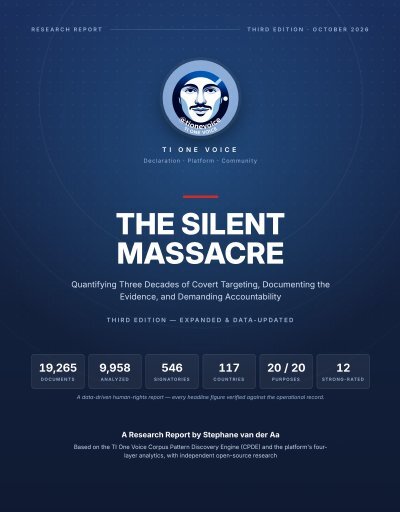
Cover of The Silent Massacre, third edition, October 2026
Research report · Third edition · October 2026

The Silent Massacre

Quantifying three decades of covert targeting, documenting the evidence and demanding accountability: a data-driven analysis of the global Targeted Individual phenomenon. Since April 2026 its evidence base has grown from 1,796 to 19,265 documents.

  • 19,265documents
  • 9,958fully analysed
  • 117countries
  • 41pages
Method

From Data to Justice

Evidence forces recognition, recognition forces investigation, investigation identifies, and identification enables justice and compensation. Every milestone is expressed in data, and the timeline depends above all on how many people document.

  1. M0RecognitionReports treated as reports.
  2. M1IdentificationCorroborated case files name those responsible.
  3. M2IndictmentProsecutors charge; the record creates the duty.
  4. M3ConvictionCourts adjudicate on the record.
  5. M4SentencingResponsibility established and sentenced.
  6. M5ResolutionDisclosure, compensation, history recorded.
Studies

Two studies in preparation

Both are proposals: neither has been carried out, and no ethics approval has been sought yet. Both commit in advance to publishing a null result.

A blinded EEG study

A pre-registered, blinded study of reported voice-to-skull experiences in three groups of about 25 people: voice-hearers who report V2K, matched controls, and clinical voice-hearers. One two-hour session per person on an open-hardware 8-channel headset costing about €300, with four tests.

Design complete Academic outreach in progress Funding not yet started

Beyond Self-Report

An independent, interview-based study of the signatory population, run by outside researchers, with three arms: 180 signatories, 90 clinical voice-hearers and 90 people from the general population. The primary outcome is the corroboration rate, judged by blinded adjudicators.

Design complete Outreach in progress Funding not yet started

Researchers and funders welcome

Full designs, ethics dossiers and cost estimates are on the platform's Studies page. If you can partner on either study, we would like to hear from you.

Sources

A Knowledge Base that grows every night

Around 11,000 documents on targeting, neurotechnology, law and human rights, in 26 categories. An automated discovery process adds 60 to 100 new sources every night, and the Wiki links concepts and articles across them.

Principles

How we handle findings

  • Research uses anonymised data only; nothing is sold or used for automated profiling.
  • Known, unknown and speculation are kept separate, and known falsehoods are named.
  • Null results are published, not buried.