1 · Anonymised use
Automatic when you sign. Anonymised and aggregate data supports research, advocacy, statistics and submissions to governments and human rights bodies. Your full name and address are excluded.
The Declaration formally records what you experience, asks authorities to investigate and protect your rights, and connects you with others around the world who report the same. It has two parts: the legal text, and a plain-language Practical Guide with examples.
You do not need to be a lawyer to understand what you are signing, and you do not need to read every clause before you feel comfortable. If the legal text feels dense, start with the Practical Guide in the second half and come back to the legal text when you are ready.
Records the signatory's experiences and petitions for recognition, investigation, protection and remediation.
The core definition, the minimum age of 18, the common manifestations and a good-faith self-attestation. You do not need proof of who is targeting you.
If competent investigation establishes the experiences, they may amount to crimes such as assault, torture, stalking and unlawful surveillance, and violate human rights instruments and national constitutions.
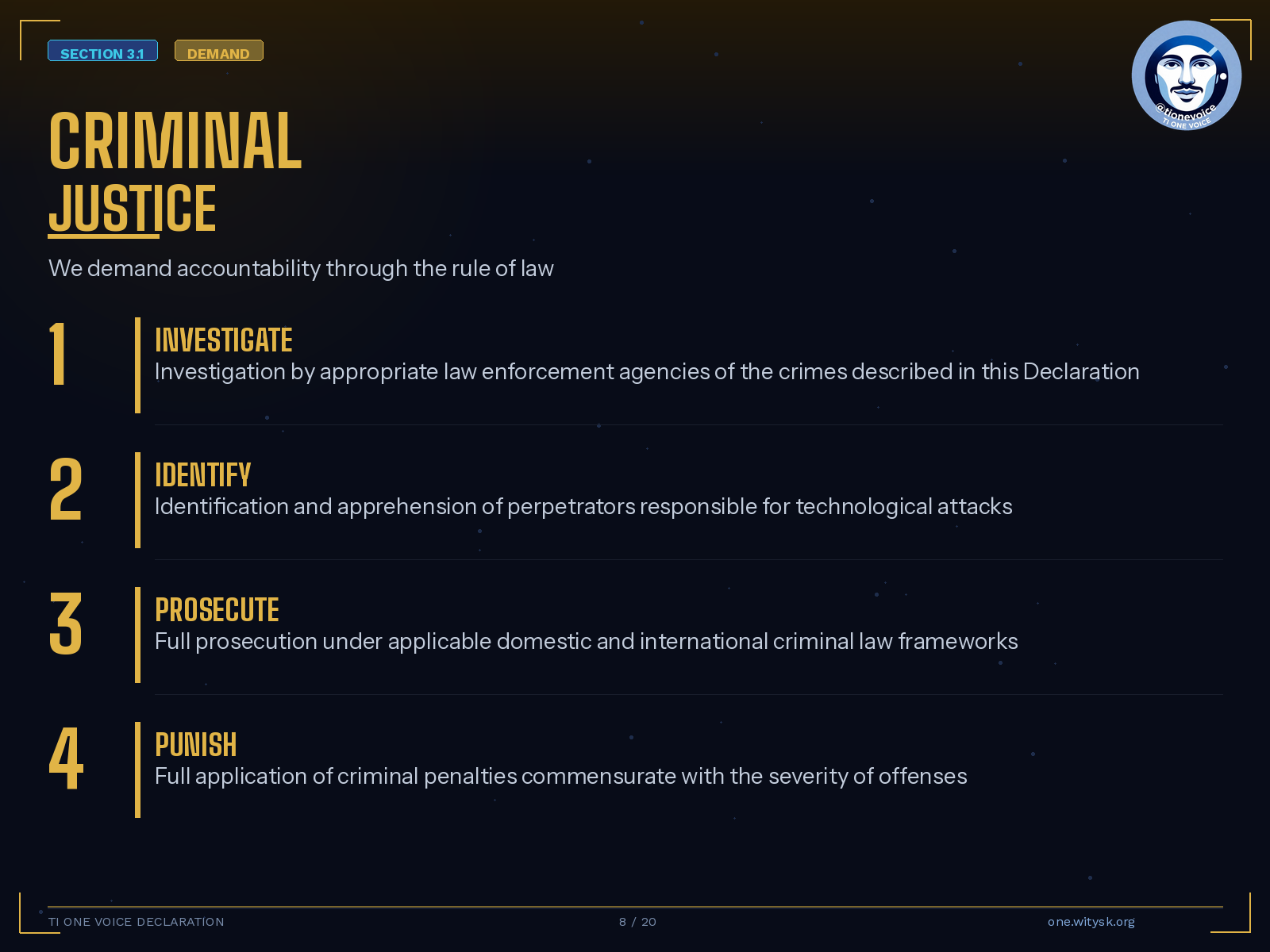
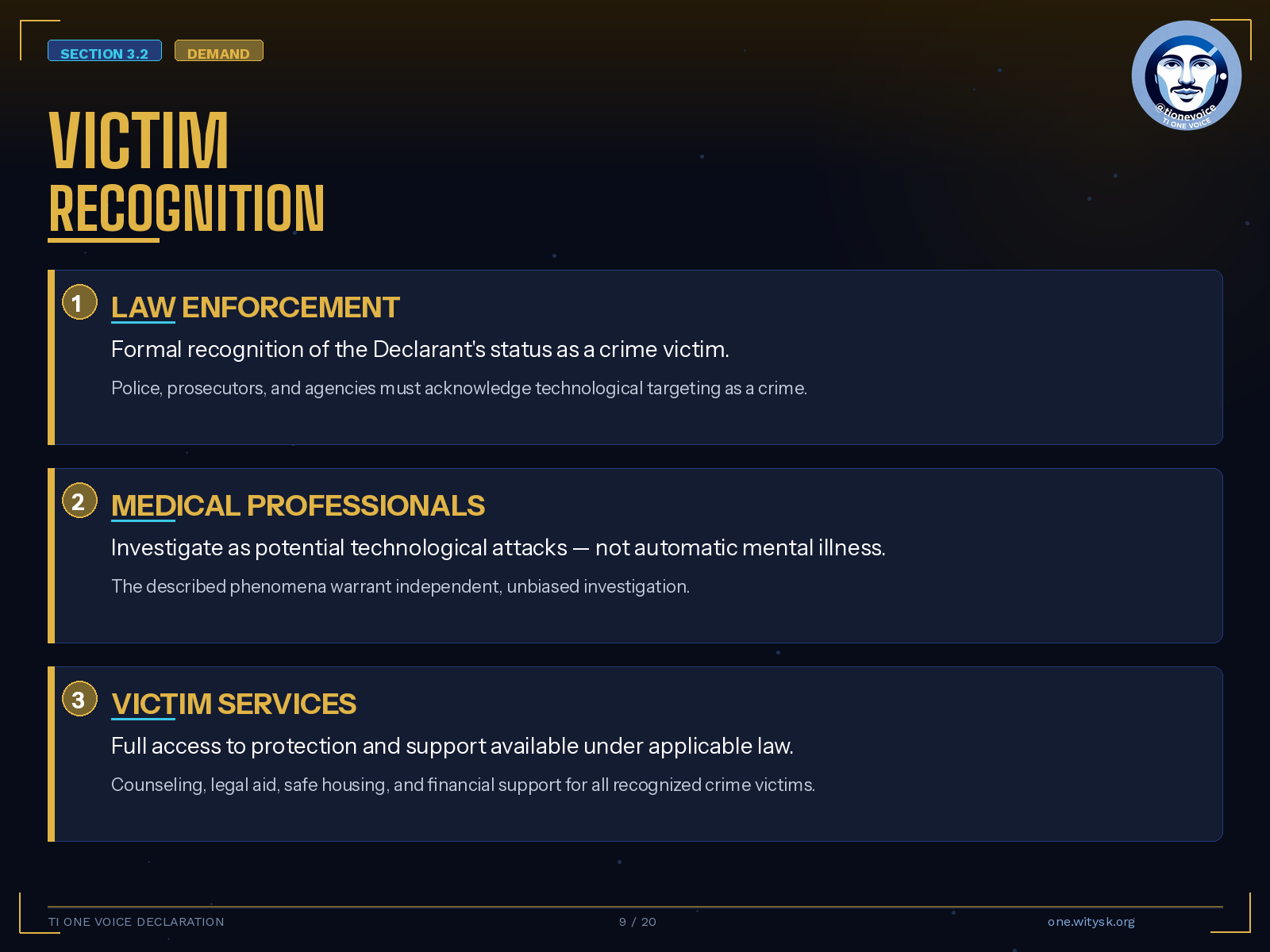
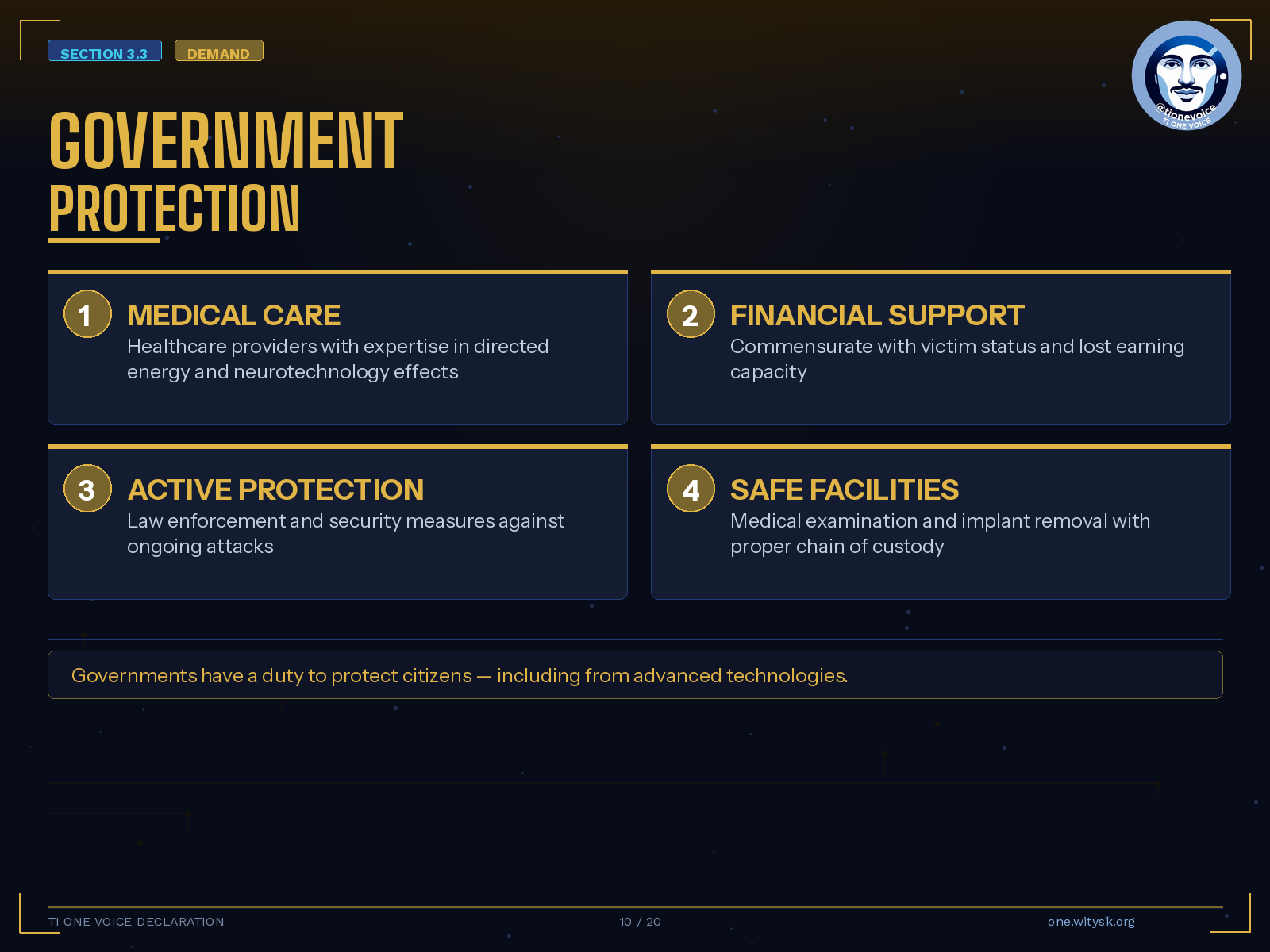
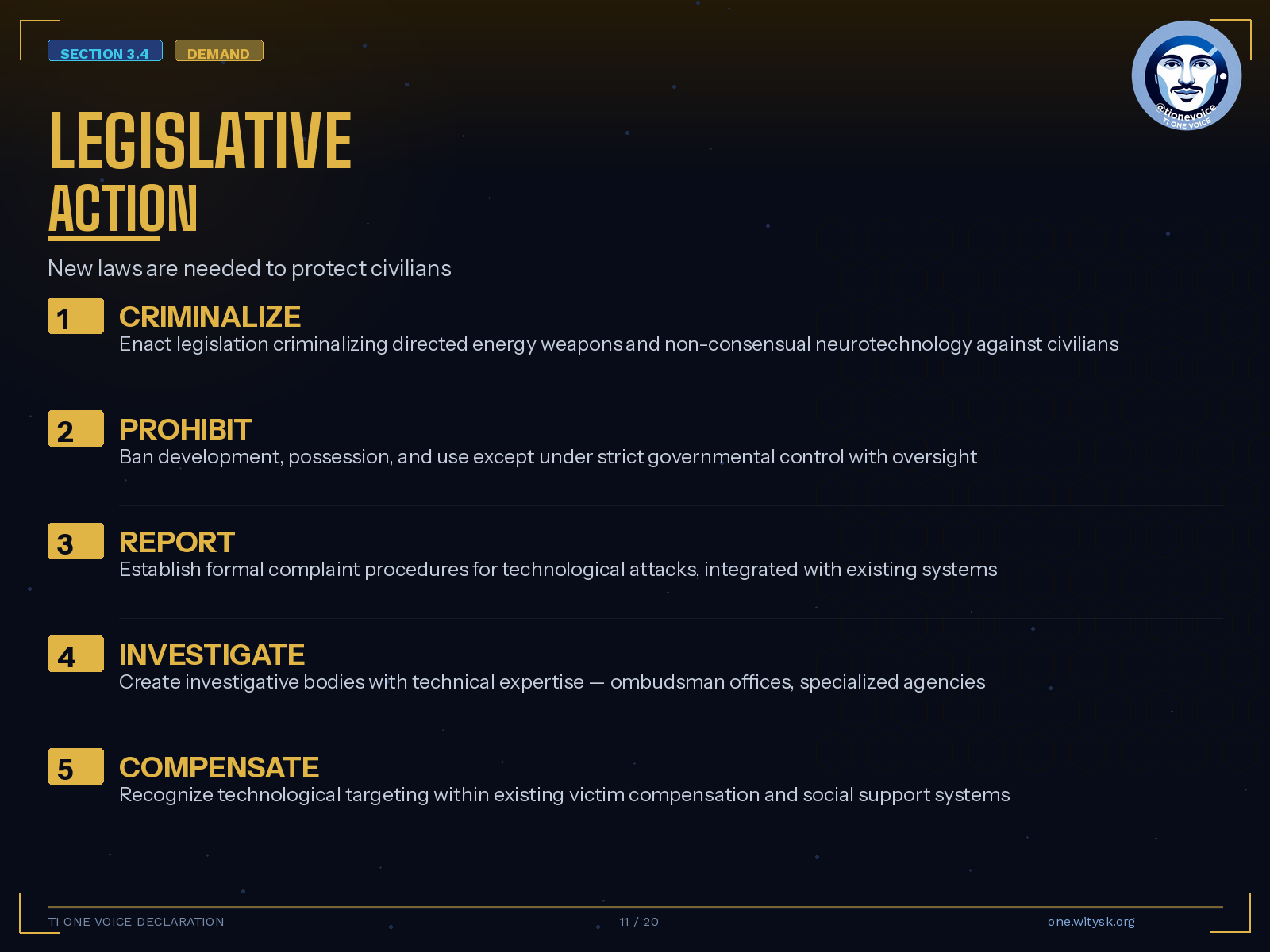
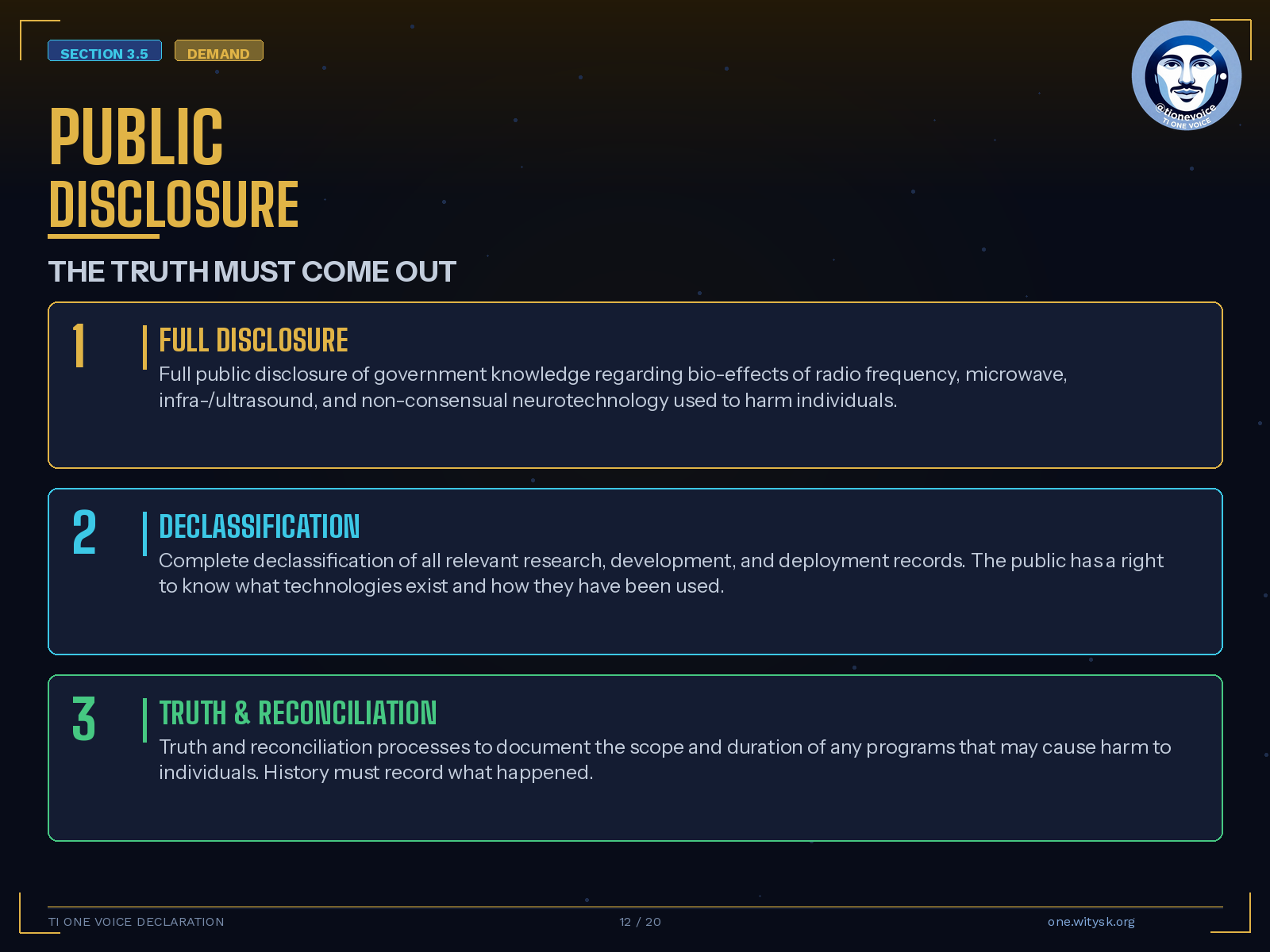
Signatories, individually and collectively, call on authorities to investigate, recognise victims, protect and support them, legislate, and disclose what governments know.
The Platform acts as a coordination and advocacy body, not a legal representative. Data use follows three consent levels; a schedule lists the permitted use cases, and insurance claims are excluded.
You affirm what you state to the best of your knowledge and belief; only knowingly false statements carry consequences. Submitting online with the signing record is a binding electronic signature.
Reported symptoms are treated as health data under GDPR Article 9. Research uses anonymised data only; data is never sold, never shared for commercial purposes and never used for automated profiling.
Belgian law applies; disputes go first to mediation in Brussels. The Data Protection Officer is independent and is not a Platform Administrator.
Substantive changes need 60 days' notice and your active acceptance; silence never counts as acceptance. A public version history is kept.
Consent at one level never counts as consent at a higher level, and declining level 2 or 3 does not affect your status as a signatory.
Automatic when you sign. Anonymised and aggregate data supports research, advocacy, statistics and submissions to governments and human rights bodies. Your full name and address are excluded.
Your name appears in a collective legal action, police report or petition only with separate, specific, written consent for that proceeding. You get 14 days' notice and a written explanation of the cost risks first.
For individual filings, such as an application to the European Court of Human Rights, or named media coverage. Requires individual written consent at the time of the specific action.
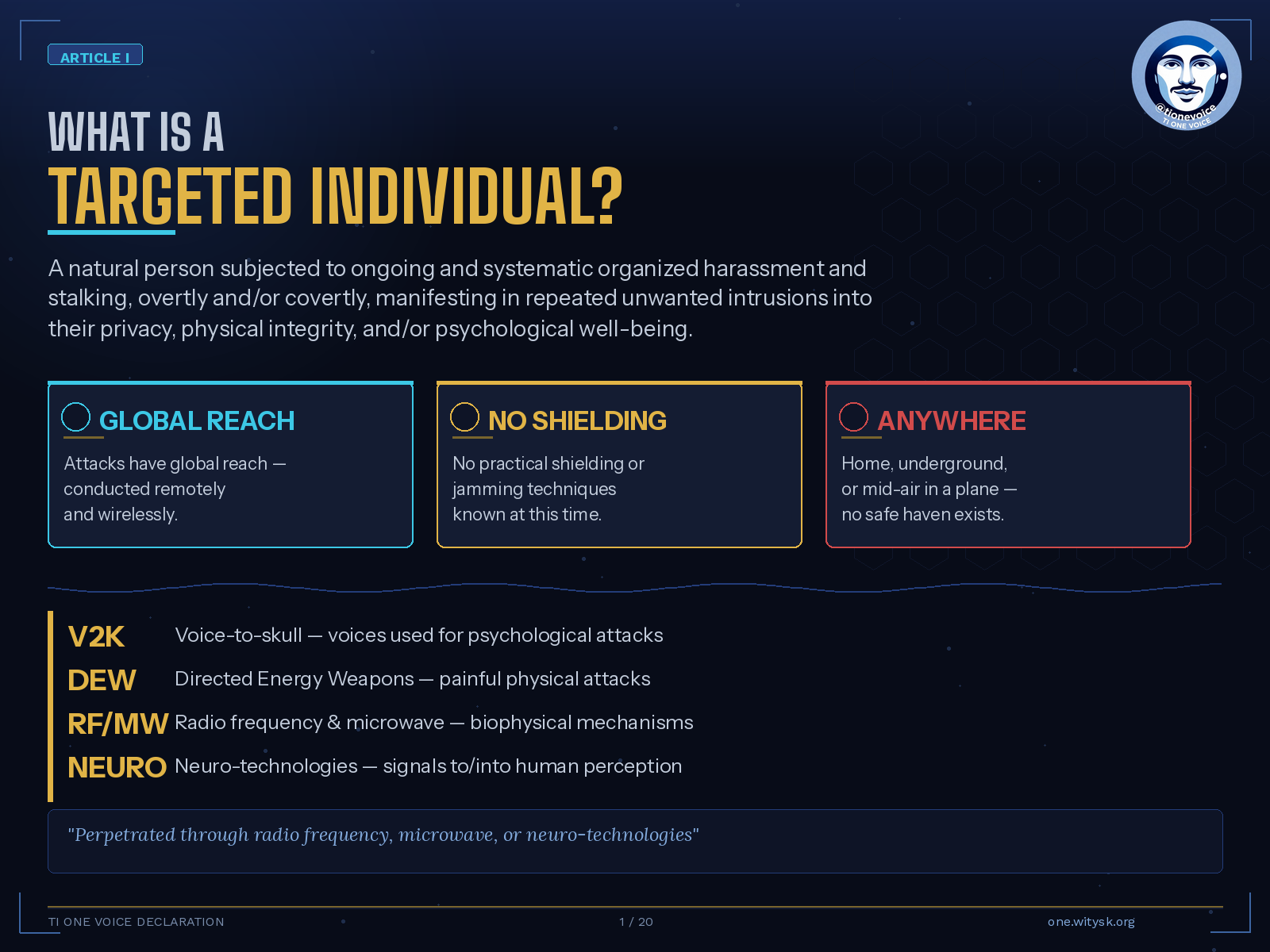
A Targeted Individual is "a natural person subjected to ongoing and systematic organized harassment and stalking, overtly and/or covertly, manifesting in repeated unwanted intrusions into their privacy, physical integrity, and/or psychological well-being". You must be 18 or older.
Common manifestations include:
You attest in good faith, to the best of your knowledge, that you experience one or more of these and that no known condition fully accounts for them. No doctor's note is required; an attestation of mental competency by a professional is optional.
Who a Targeted Individual is, and the five demands of Article III. Free to share; select a card to open it at full size.
Each version is a response to review and to feedback from the community.
| Version | Date | Change |
|---|---|---|
| 1.0 | 20 December 2025 | First version, written by Stephane van der Aa |
| 1.1 | 1 January 2026 | Community feedback incorporated |
| 2.0 | 8 April 2026 | Full review |
| 3.0 | 10 April 2026 | Restructured into the Legal Document and the Practical Guide |
| 3.1 | 10 April 2026 | Review of the legal wording |
| 3.1b | 15 April 2026 | Members' comments incorporated |
| 3.3 | 31 May 2026 | Members' comments incorporated |
| 3.3 | 1 October 2026 | Optional community-analysis permission added (Section 6.7) |
| 3.4 | 19 October 2026 | Section 6.7 replaced by a statement on community analysis |